
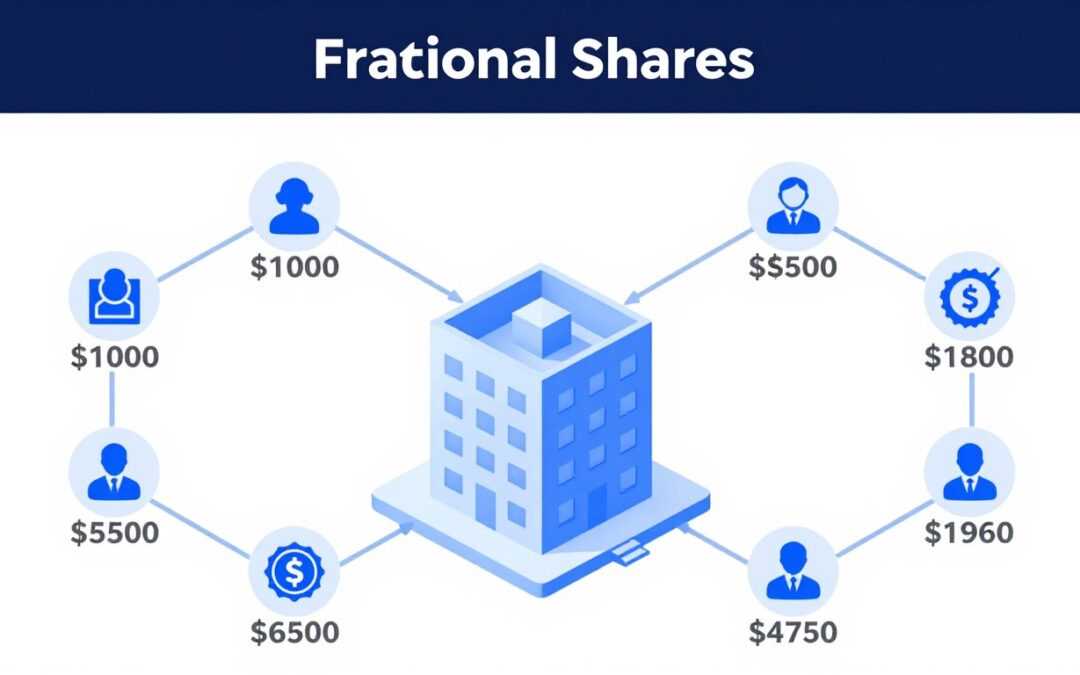
Real estate investing has traditionally been reserved for those with substantial capital and expertise. However, fractional real estate investment platforms are changing this landscape, making it possible for everyday investors to own pieces of valuable properties with minimal upfront investment. This comprehensive guide explores how these innovative platforms work, their benefits and risks, and how you can start building your real estate portfolio today—even with limited funds.
What Is Fractional Real Estate Ownership?

Fractional ownership allows multiple investors to share in a single property’s benefits
Fractional real estate ownership is exactly what it sounds like—owning a fraction or percentage of a real estate asset rather than the entire property. Through specialized investment platforms, you can purchase shares in residential homes, commercial buildings, vacation properties, or real estate funds with investments starting as low as $10.
Unlike traditional real estate investing that requires significant capital, market knowledge, and hands-on management, fractional ownership provides a streamlined approach. You gain exposure to real estate’s benefits—potential appreciation, rental income, and portfolio diversification—without the typical barriers to entry.
These platforms handle property selection, acquisition, management, and eventually, the sale. As an investor, you simply choose which properties align with your investment goals and purchase your desired shares.
How Real Estate Fractional Investment Platforms Work

Understanding the mechanics behind these platforms helps you make informed investment decisions. Here’s how most real estate fractional investment platforms operate:
- Property Selection: The platform identifies promising real estate opportunities based on location, potential returns, and growth prospects.
- Legal Structure Creation: Properties are placed into a legal entity (typically an LLC or REIT) that allows for fractional ownership.
- Fractionalization: The property is divided into shares or tokens that represent partial ownership.
- Investor Participation: Investors purchase shares through the platform, often with low minimum investments.
- Professional Management: The platform handles all aspects of property management, including tenant relations, maintenance, and financial administration.
- Income Distribution: Rental income is distributed to investors proportionally based on their ownership percentage.
- Exit Strategy: After a predetermined holding period (typically 3-7 years), the property is sold and proceeds are distributed to investors.
Many platforms now use blockchain technology to tokenize real estate assets, increasing transparency and potentially improving liquidity through secondary marketplaces where investors can trade their shares.
Benefits of Fractional Real Estate Investing

Advantages
- Low Barrier to Entry: Start investing with as little as $10-100, depending on the platform.
- Instant Diversification: Spread your investment across multiple properties and markets.
- Passive Income: Earn regular dividend payments from rental income.
- Professional Management: No landlord responsibilities or property management headaches.
- Potential Appreciation: Benefit from property value increases over time.
- Access to Premium Markets: Invest in high-value areas that would otherwise be unaffordable.
- Transparency: Many platforms provide detailed property information and regular performance updates.
Disadvantages
- Limited Control: No say in day-to-day property management decisions.
- Potential Liquidity Issues: Some platforms have lock-up periods or limited secondary markets.
- Platform Fees: Management and transaction fees can impact overall returns.
- Platform Risk: Dependent on the platform’s financial stability and business model.
- No Physical Use: Unlike timeshares, you typically can’t use the properties personally.
- Regulatory Considerations: Some platforms are limited to accredited investors only.
- Newer Industry: Many platforms have limited track records to evaluate.
Ready to start your real estate investment journey?
Explore top-rated platforms that allow you to invest with minimal capital while enjoying the benefits of real estate ownership.
Start Investing TodayComparing Top Real Estate Fractional Investment Platforms
With numerous platforms available, it’s important to understand their unique features, requirements, and investment approaches. Here’s a comprehensive comparison of leading real estate fractional investment platforms to help you make an informed decision:
| Platform | Minimum Investment | Property Types | Fee Structure | Liquidity Options | Investor Eligibility | Notable Features |
| Arrived | $100 | Single-family rentals, Vacation rentals | 3.5% sourcing fee, 0.15% AUM fee (rentals); 5% sourcing fee, 5% gross rents fee (vacation) | 5-7 year target hold period | Non-accredited welcome | Quarterly dividends, professionally managed properties |
| Fundrise | $10 | eREITs, residential, commercial | 1% annual (0.15% advisory fee + 0.85% asset management) | Secondary marketplace with early redemption penalties | Non-accredited welcome | Portfolio diversification, beginner-friendly interface |
| HappyNest | $10 | Commercial real estate | Varies by property | Limited | Non-accredited welcome | Mobile app with spare-change round-ups |
| Lofty | $50 | Rental properties | Varies by property | Tokenized shares with trading options | Non-accredited welcome | Blockchain-based, daily rental income payments |
| HoneyBricks | $1,000 | Tokenized real estate | 1% annual management fee | Secondary marketplace | Accredited investors only | Crypto payment options, blockchain technology |

Each platform offers unique advantages depending on your investment goals, available capital, and risk tolerance. For beginners with limited funds, Fundrise and HappyNest provide the lowest entry points at just $10. Those interested specifically in residential properties might prefer Arrived or Lofty, while investors comfortable with blockchain technology have options like HoneyBricks and Lofty.
How to Choose the Right Fractional Real Estate Platform

Selecting the right platform for your investment needs requires careful consideration of several factors. Here’s a step-by-step approach to finding your ideal match:
1. Assess Your Investment Goals and Resources
- Available Capital: Determine how much you can comfortably invest.
- Investment Timeline: Consider how long you can leave your money invested.
- Return Expectations: Clarify whether you prioritize income, appreciation, or both.
- Risk Tolerance: Evaluate your comfort level with different property types and markets.
2. Evaluate Platform Characteristics
- Track Record: Research the platform’s history, performance, and reputation.
- Property Selection Process: Understand how properties are vetted and selected.
- Fee Structure: Compare all fees including sourcing, management, and exit fees.
- Liquidity Options: Check if and how you can sell your shares before the holding period ends.
- Investor Requirements: Verify if you meet eligibility criteria (accredited vs. non-accredited).
3. Review Investment Offerings
- Property Types: Ensure the platform offers the real estate categories you’re interested in.
- Geographic Diversity: Look for options in markets with strong growth potential.
- Minimum Investments: Confirm the entry point aligns with your budget.
- Historical Returns: Examine past performance data (while understanding it doesn’t guarantee future results).
“The best platform isn’t necessarily the one with the lowest minimum investment or highest projected returns—it’s the one that best aligns with your specific investment goals, timeline, and risk tolerance.”
Getting Started with Fractional Real Estate Investing

Ready to dive into fractional real estate investing? Follow these steps to begin building your property portfolio:
- Research and Select a Platform: Based on the criteria discussed above, choose a platform that matches your investment goals.
- Create an Account: Complete the registration process, which typically includes identity verification to comply with financial regulations.
- Browse Available Investments: Explore current offerings, reviewing property details, projected returns, and holding periods.
- Conduct Due Diligence: Research properties of interest, examining location data, market trends, and platform-provided analysis.
- Fund Your Account: Link your bank account or use other approved payment methods to transfer funds.
- Make Your First Investment: Purchase shares in your chosen property or fund.
- Monitor Performance: Track your investments through the platform’s dashboard, reviewing dividend payments and property updates.
- Reinvest or Diversify: As you gain comfort, consider reinvesting dividends or diversifying across additional properties.
Pro Tip: Start small with your first investment to familiarize yourself with the platform and process. As you gain confidence, you can gradually increase your investment amounts and diversify across different property types and locations.
Begin your real estate investment journey today
With as little as $10, you can start building a diversified real estate portfolio through fractional investing.
Explore Top PlatformsFuture Trends in Fractional Real Estate Investing

The fractional real estate investment landscape continues to evolve rapidly. Here are key trends shaping the future of this investment approach:
Increased Tokenization and Blockchain Integration
More platforms are adopting blockchain technology to tokenize real estate assets, potentially improving transparency, reducing transaction costs, and enhancing liquidity through 24/7 trading capabilities.
Enhanced Liquidity Options
As the market matures, we’re seeing the development of more robust secondary marketplaces where investors can trade their shares, reducing the traditional illiquidity of real estate investments.
Regulatory Evolution
Expect continued regulatory development as governments work to balance investor protection with innovation in this growing sector. This may open more opportunities for non-accredited investors.
International Expansion
Many platforms are expanding globally, allowing investors to access real estate markets worldwide from a single account, further diversifying investment options.
Integration with Traditional Finance
We’re beginning to see integration between fractional real estate platforms and traditional financial institutions, potentially bringing these investment options to mainstream financial planning.
Frequently Asked Questions About Fractional Real Estate Investing

How are returns generated from fractional real estate investments?
Returns typically come from two sources: regular dividend payments from rental income (distributed monthly, quarterly, or annually depending on the platform) and appreciation when the property is eventually sold. Some platforms also offer potential tax benefits through depreciation pass-through.
Are fractional real estate investments safe?
While all investments carry risk, fractional real estate platforms typically provide some safety through asset-backed investments (the physical property) and professional management. However, risks include platform viability, property performance, market fluctuations, and potential liquidity constraints. Diversifying across multiple properties and platforms can help mitigate these risks.
How liquid are fractional real estate investments?
Liquidity varies significantly by platform. Some offer secondary marketplaces where you can sell shares to other investors, while others have defined redemption windows with potential early withdrawal penalties. Many platforms have target hold periods of 3-7 years. Always understand the liquidity options before investing.
Do I need to be an accredited investor?
Not necessarily. Many platforms like Fundrise, Arrived, and HappyNest welcome non-accredited investors, while others like HoneyBricks require accreditation. Platforms open to non-accredited investors typically register their offerings with the SEC under Regulation A+.
How do fractional real estate platforms make money?
Platforms typically generate revenue through various fees, including acquisition/sourcing fees (when properties are purchased), asset management fees (ongoing), property management fees (if applicable), and sometimes performance fees based on returns. Understanding the fee structure is crucial for evaluating your potential net returns.
Conclusion: Is Fractional Real Estate Investing Right for You?
Real estate fractional investment platforms have democratized access to an asset class that was previously available only to the wealthy or professionally connected. With minimum investments as low as $10, almost anyone can now build a diversified real estate portfolio.
These platforms offer a compelling combination of passive income potential, professional management, and possible appreciation—without the traditional headaches of property ownership. However, they also come with considerations around liquidity, platform stability, and fee structures that must be carefully evaluated.
The ideal approach for many investors is to start small, gain familiarity with how these platforms work, and gradually increase exposure as comfort and knowledge grow. By carefully selecting platforms that align with your investment goals, timeline, and risk tolerance, fractional real estate investing can become a valuable component of a well-diversified investment strategy.
Ready to build your real estate portfolio?
Compare top platforms and start investing in fractional real estate with minimal capital today.